

Japanese Cars in China:Not a Rout,but“Growing Pains and Spiritual Practice”on the Path of Transforma
News of Japanese companies such as Sony and Mitsubishi adjusting their layouts in China has made "the fate of Japanese manufacturing in China" a hot topic — are they "defeated troops" driven out by Chinese brands, or "dormant ones" taking the initiative to shrink and accumulate strength? Focusing on Japanese cars that once dominated China's auto market, the answer becomes clearer. From a peak of nearly 25% market share to a low of 12.9% in 2025, the decline of Japanese cars is never an accident of "unilateral crushing", but an inevitable result of failing to keep up with market rhythms and the silent iteration of consumer demand amid the tide of industrial transformation. Behind this seemingly "steady retreat" is not the collapse of Japan's automobile industry, but the "acclimatization" of traditional advantages in the new energy era; its future depends entirely on whether it can let go of past obsessions and truly integrate into the ecology of China's market.
I. Halved Share: "Struggling with Every Step" Under Internal and External Pressures
Japanese cars are having a hard time in China due to the combination of fierce external competition and slow internal responses. China's automobile industry has long switched tracks — after the penetration rate of new energy vehicles exceeded 50%, electrification + intelligence have become the "rules of the game" in the new arena. Local brands such as BYD and NIO have established a firm foothold in three-electric systems (battery, motor, electronic control), and their smart cockpits and autonomous driving have iterated rapidly, directly overshadowing the traditional advantages of Japanese cars. The low fuel consumption of BYD's DM-i hybrid has precisely hit the "livelihood" of Japanese hybrids; the standard urban navigation-assisted driving in models at the 200,000-yuan level makes Japanese cars still stuck at the basic L2 level seem particularly outdated.
Changes in policies and consumer demand have not left much buffer space for Japanese cars. China's subsidies for new energy vehicles, license plate concessions, and the layout of more than 2 million charging piles have facilitated the popularization of pure electric vehicles. However, hydrogen fuel cells, which Japanese cars bet on, have failed to achieve large-scale development due to the scarcity of hydrogen refueling stations and high costs. More importantly, young Chinese car buyers are no longer satisfied with "transportation"; instead, they regard cars as "intelligent mobile terminals". Their requirements for intelligent experiences such as infotainment system fluency and OTA (Over-the-Air) updates far exceed the previous obsession with fuel economy — this is precisely the "weakness" of Japanese cars.
The core reason for missing the opportunity lies in the "hesitation" of Japanese cars themselves. They have long relied on hybrid and hydrogen fuel technologies and hesitated to make heavy investments in pure electric routes. By 2025, the share of new energy vehicle sales of Japanese cars in China has not exceeded 5%, and most of the models launched are "oil-to-electric converted models" that the market does not accept. What's worse, the "centralized" decision-making of Japanese headquarters has deprived Chinese teams of their right to speak, making the rhythm of new product launches always half a beat slow. Honda still insists on importing core components from Japan, while Nissan, despite advocating "localization", has a capacity utilization rate of only 25.5%. Coupled with scandals such as Takata airbags and collective fraud in 2024, the once "quality myth" has been shattered, and consumers' trust has naturally faded.
II. Craftsmanship: A "Golden Signboard" or "Shackles of Transformation"?
"Craftsmanship" was once the "killer weapon" for Japanese cars to conquer China's market. The ultimate pursuit of manufacturing precision and reliability made countless consumers pay. However, at the crossroads of industrial transformation, this persistence has gradually turned into "stubbornness" and become "shackles" that hinder transformation. Japanese cars are too superstitious about past successes — while the world is moving towards electrification, Toyota and Honda still firmly believe that hybrids are the best transitional solution, and dragged their feet on pure electric R&D, thus missing the golden period of new energy development in the mid-to-late 2010s.

This stubbornness is also hidden in the "closed obsession" with technical standards. Japan's automobile industry chain has long revolved around the strict Japanese Industrial Standards (JIS), trying to firmly control the supply chain through this set of standards. However, Chinese auto parts enterprises have long risen. By 2025, more than a dozen Chinese enterprises have passed core JIS certifications, upgrading from low-end supporting roles such as producing tires and glass to core suppliers capable of supplying electronic components and interior assemblies. More interestingly, Chinese enterprises have shifted from "following Japanese standards" to "co-formulating standards" — for example, the assisted driving system jointly developed by DENSO and Horizon Robotics has its underlying algorithms incorporated into the global technology library of Japanese enterprises, achieving reverse technology output. This shows that today's industrial competition depends not on a single technological advantage, but on ecological synergy capabilities; holding on to closed standards will sooner or later lead to elimination.
Of course, craftsmanship itself is not wrong; the pursuit of quality will always be the core of the automobile industry. The problem with Japanese cars is not sticking to quality, but tying quality to traditional technologies and failing to extend this rigor to the fields of new energy and intelligence in a timely manner. Fortunately, giants such as Toyota and Honda have woken up, starting to invest heavily in new energy R&D, trying to combine traditional manufacturing advantages with electrification technology — this has left a glimmer of hope for their transformation.
III. Future Positioning: The Role Transformation from "Dominators" to "Collaborators"
China's auto market will remain the core arena for global new energy and intelligence in the future, and the identity of Japanese cars has changed from "market dominators" in the past to "collaborators" that need to integrate into the ecosystem. Whether they can stage a comeback depends on the determination and speed of their localized transformation. Judging from current actions, Japanese cars have begun to "reinvent themselves": Toyota has delegated the final decision-making power of product development to Chinese teams and established the "China Chief Engineer" system to make products more in line with Chinese consumers; Nissan has directly cooperated with Huawei on HarmonyOS cockpits and joined hands with Momenta on high-level intelligent driving to quickly make up for the shortcomings in intelligence; Honda plans to double the size of its Chinese R&D team and learn from tech companies' models to improve response speed.
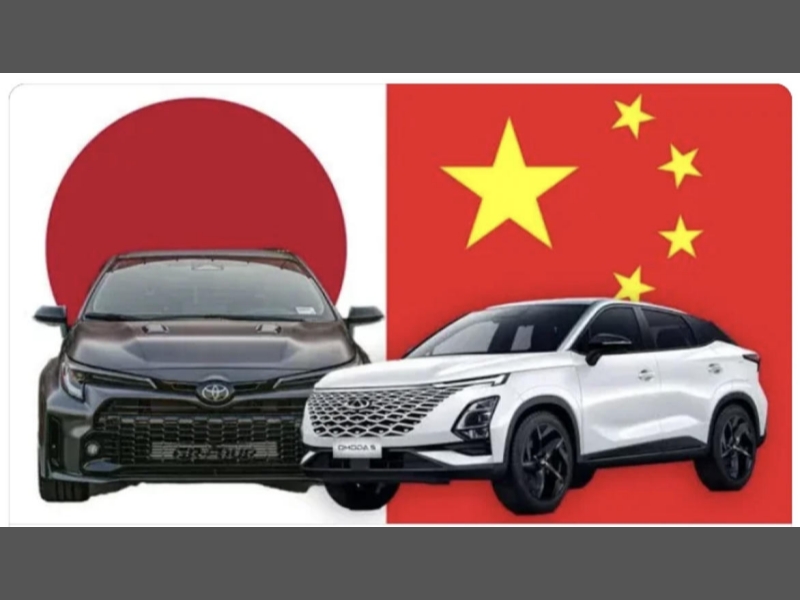
For China's market, the transformation of Japanese cars is not a threat but an opportunity. Their profound foundation in lean manufacturing and supply chain management can complement Chinese enterprises' electrification and intelligent technologies, jointly enhancing the competitiveness of the entire industry. There are already signs of such complementarity: Toyota's new energy base in Indonesia has directly introduced CATL's battery factory, forming a linkage model of "Chinese technology + Southeast Asian resources + Japanese whole vehicles", which not only speeds up supply by 30% but also reduces costs by 15%-20%; when Lexus built a factory in Shanghai, it directly set a target of 82% local parts utilization rate, a significant improvement from ten years ago.
However, the transformation path of Japanese cars is not smooth. Problems such as strategic wavering, lack of funds, and organizational inertia have not been resolved: Honda has postponed the launch of its pure electric flagship model, and Subaru has even cut investment in electric vehicles, showing that they are still hesitant; Nissan lost 670.9 billion yen in the 2024 fiscal year, forcing it to sell its headquarters building to raise funds, which will naturally affect R&D investment. In the next 3-5 years, the three major Japanese automakers are likely to have "mixed fortunes": Toyota should be able to stabilize with its hybrid base and steady transformation; Nissan may turn around if it can fully delegate decision-making power and adhere to technological cooperation; but if Honda still clings to the obsession of importing core components, it may become more and more marginalized.

IV. The Path to Win-Win: Breaking the "Zero-Sum Game" and Building a Common Industrial Ecosystem
To achieve "win-win" between Chinese and Japanese automobile industries, the key is to abandon the "zero-sum game" of "you win, I lose" and jointly build an open and collaborative industrial ecosystem. Specifically, efforts can be made in three aspects. First, technological R&D should be "united". Chinese enterprises have advantages in three-electric systems and intelligent driving algorithms, while Japanese cars have accumulated experience in whole-vehicle integration and manufacturing processes. The two sides can carry out joint R&D, focusing on cutting-edge fields such as solid-state batteries and automotive-grade chips, to jointly break through technological bottlenecks. The cooperation between DENSO and Horizon Robotics has proven that such alliances can not only strengthen individual enterprises but also promote the global popularization of technologies.
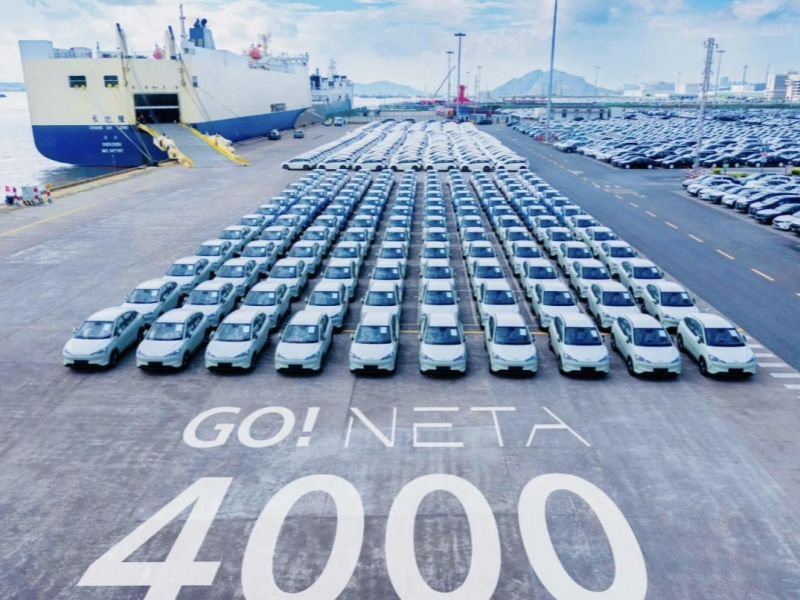
Second, the supply chain should be "united as one". Chinese auto parts enterprises should continue to improve their technology, transforming from "supporting suppliers" of Japanese enterprises to "core technology partners"; Japanese cars should put aside their arrogance, open up supply chain thresholds, and form a pattern of "Chinese R&D - Chinese manufacturing - global sharing". Data from the China Association of Automobile Manufacturers shows that from January to April 2025, China's auto parts exports to Japan increased by 6.3%, with more and more high-value-added products, laying the foundation for supply chain collaboration.
Finally, the market and policies should have "positive interaction". China's market should remain open, providing fair competition opportunities for foreign brands including Japanese cars; Japanese cars should truly integrate into China's market, not only conducting "product adaptation" but also participating in the construction of charging facilities and intelligent transportation networks, growing together with China's automobile industry.

The decline in the market share of Japanese cars in China is not the "rout" of Japanese manufacturing, but the "growing pains" of traditional industries in the new energy revolution. Claiming that "Chinese brands have completely defeated Japanese cars" underestimates the transformation determination of Japanese cars and ignores the huge potential of industrial collaboration. The future competition in the auto market depends not on the strength of individual brands, but on the quality of the entire ecosystem. Only by letting go of past obsessions and truly integrating into China's innovation ecosystem can Japanese cars succeed; only by maintaining innovative vitality and inclusively absorbing global advantageous resources can Chinese brands achieve win-win results and jointly promote the global automobile industry towards a new era of electrification and intelligence.


