

Global Triple Growth China Absent Renault Rise Fall Lessons for Chinese NEVs
In early 2026, the Renault Group delivered an impressive global performance report: its 2025 sales reached 1.628 million units, a year-on-year increase of 3.2%, achieving three consecutive years of growth. It firmly ranks second in Europe’s hybrid market, with overseas market contribution rate rising to 38%. However, behind this glory, the Chinese market—once hailed as a promising growth driver—was nowhere to be seen. This market, once full of expectations, had already become Renault’s "abandoned child" back in 2020. On one side is the vigorous advancement in the global market; on the other is the disappearance from the Chinese market. This stark contrast not only reflects Renault’s strategic choices but also provides a precious reference for Chinese new energy vehicle (NEV) manufacturers accelerating their global expansion.
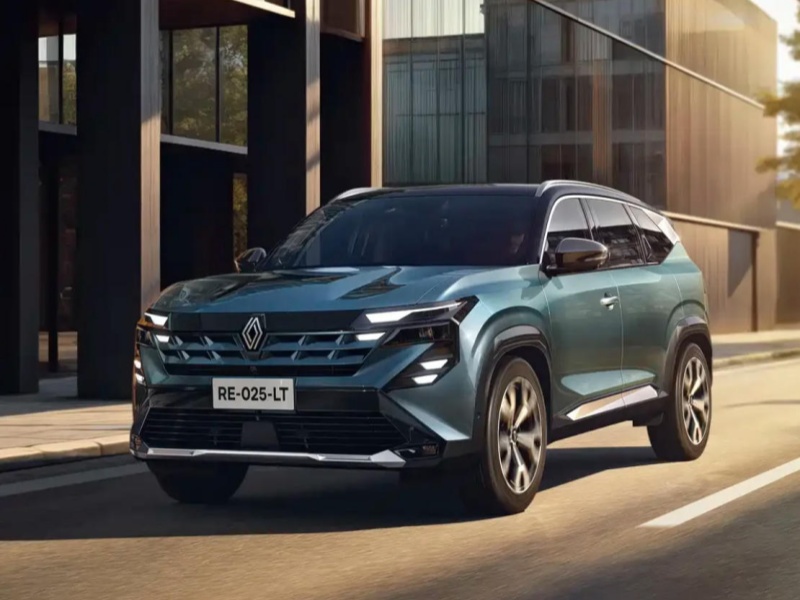
First, let’s clarify the core strength behind Renault’s global growth. Its three consecutive growths rely on two precise strategies: first, seizing the right rhythm of electrification transformation, and second, selecting the correct overseas growth markets. In Europe, Renault implemented a "dual-power" strategy: hybrid vehicle sales surged by 17%, accounting for nearly 40% of total sales—far exceeding the market average—with the Symbioz model becoming a blockbuster in the hybrid market. In the pure electric sector, Renault also performed admirably: the Renault 5 e-tech electric ranked second in Europe’s retail market, and electrified models accounted for over 20% of total sales, perfectly aligning with Europe’s stringent carbon emission regulations. In overseas markets, Renault did not expand blindly but focused on key regions such as Latin America, South Korea, and Morocco. Through localized models like the Renault Boreal and Duster, it made precise inroads—achieving an 11.3% growth in Latin America and a staggering 55.9% surge in South Korea—solidifying its position as the top French automotive brand globally. This combination of "focusing on core markets + aligning with policy trends" is the key to its global growth.
Yet, this strategy that proved successful worldwide completely failed in the Chinese market, ultimately leading to its "disappearance". Delving deeper, Renault’s frustration in China is essentially an inevitable result of the combination of "the arrogance of a latecomer" and "the lack of localization". Firstly, its strategic layout was seriously delayed, causing it to miss the golden window of opportunity in the Chinese automotive market. In 2006, despite having sufficient funds, Renault chose to deepen its presence in South America instead of entering China, directly missing the explosive growth period from 2009 to 2013. When it hastily entered the market by establishing Dongfeng Renault in 2013, the market had already been carved up by brands like Volkswagen and Toyota. More fatally, after entering the market, it made a "reckless expansion" mistake: shortly after sales exceeded 70,000 units in 2017, it blindly planned a second-phase factory and subsequently launched the development of multiple models, most of which were ultimately aborted, wasting a great deal of capital and human resources.
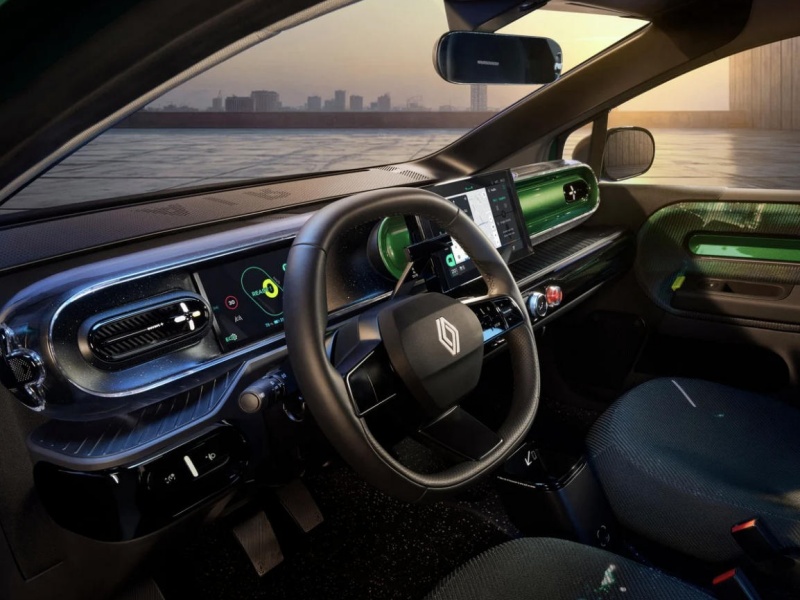
Product and brand "acclimatization" became the final straw that broke the camel’s back. Renault’s brand proposition of "French design and a relaxed lifestyle" never resonated with Chinese consumers, and its later transition to "mid-to-high-end positioning" lacked credibility due to significant terminal discounts. In terms of product strength, shortcomings were evident: interiors were either uniformly dark and oppressive or filled with a strong plastic feel—even Renault executives admitted they were inferior to Geely’s models; the cramped interior space failed to meet the needs of Chinese families; power-wise, it long relied on Nissan’s naturally aspirated engines and only launched a 1.3T turbocharged engine shortly before withdrawing from the market, completely contradicting Chinese consumers’ perception of European cars as "powerful". Additionally, Renault had four joint venture companies in China with chaotic equity relationships and no synergistic effects. Eventually, after the Chinese automotive market shifted to stock competition in 2018, it was quickly eliminated.
Renault’s ‘successes’ and ‘failures’ serve as a valuable textbook for Chinese new energy vehicle (NEV) manufacturers accelerating their global expansion. Its global growth advantages are precisely the key lessons Chinese automakers need to learn for going global: first, accurately grasp the policies and demands of target markets. Renault’s bet on electrification in Europe essentially stemmed from understanding carbon emission regulations. Similarly, Chinese automakers going global need to strengthen the compliance of pure electric products in Europe and focus on hybrid models in Southeast Asia. Second, promote in-depth localization rather than simple "exporting domestic products". Renault’s approach of launching customized models in Latin America and South Korea is worth learning from. Chinese automakers need to adjust products based on local road conditions and consumption habits—for example, optimizing vehicle durability in emerging markets and enhancing the localized adaptation of smart cockpits in European and American markets.

Renault’s frustration in China also warns Chinese automakers to avoid three major pitfalls: do not miss market windows of opportunity. Currently, the global NEV market is in a growth phase, and Chinese automakers need to accelerate layout to avoid repeating Renault’s "latecomer" mistake; do not ignore localized brand communication—align brand concepts with local culture instead of talking to themselves; more importantly, streamline overseas cooperative relationships, avoid blindly expanding joint ventures, and focus on core partners to build synergistic effects.
Renault’s story tells us that success in the global market is never accidental, and frustration in China is by no means unexpected. For Chinese NEV manufacturers, going global is not simply "selling cars overseas", but rather, like Renault’s in-depth cultivation of Europe and Latin America, achieving "understanding policies, understanding markets, and understanding users". Only by learning from Renault’s lessons and drawing on its experience in precise layout can Chinese automakers truly gain a firm foothold in the global NEV competition.


